
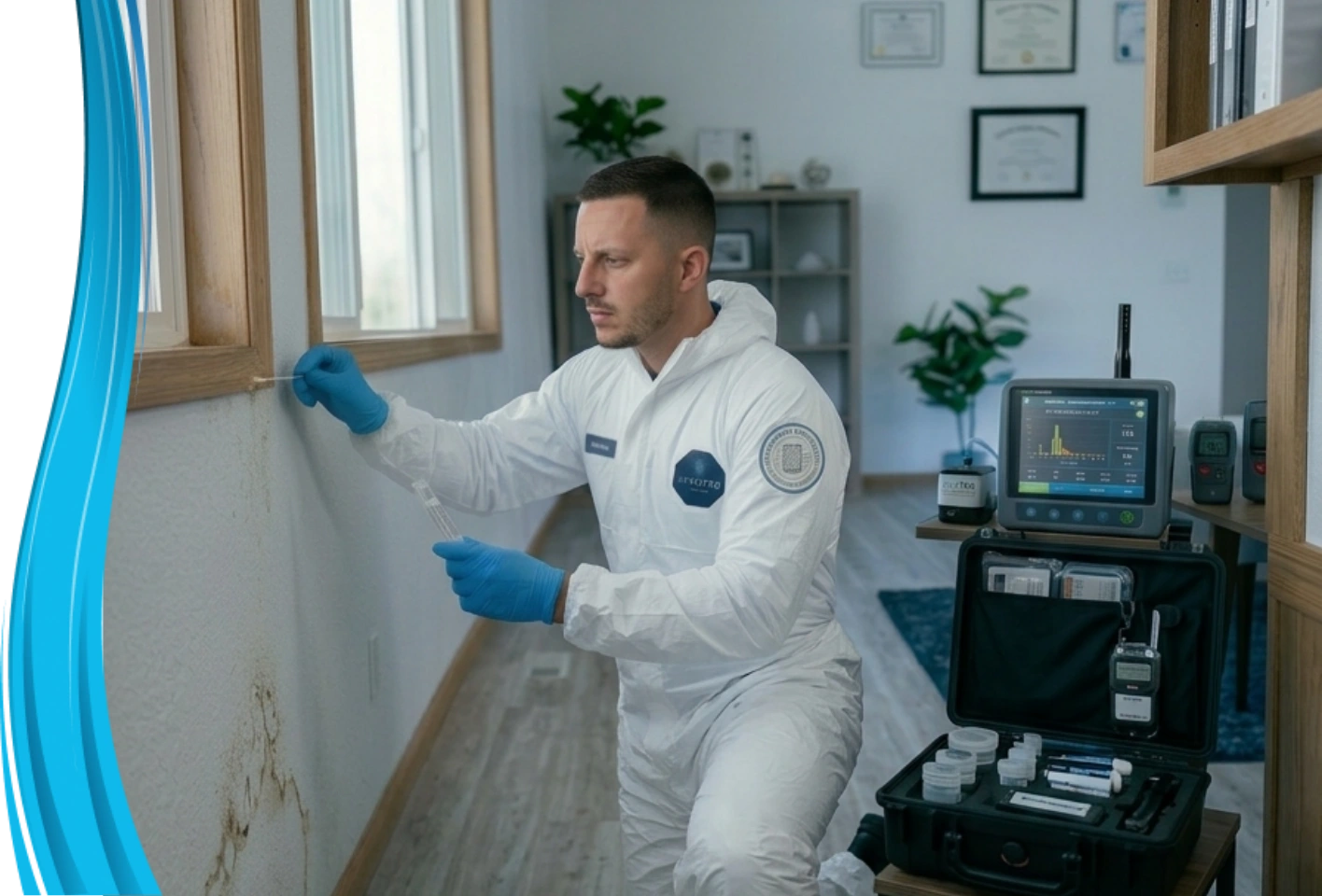
Emergency Response for NJ, PA & DE Homes & Businesses
Radon Testing in New Jersey - Professional Home Air Quality Analysis
Certified Mold Testing & Mold Remediation Experts
Fast emergency response across NJ, PA & DE
20+ years certified, 330+ 5-star reviews
4.9

Based on 330+ Reviews
5.0
Based on 20+ Reviews
Accredited
A+ Rating

Get Your Free Consultation




See What Our New Jersey Customers Are Saying
Trustindex verifies that the original source of the review is Google.Posted on
- 5.0 rating on Google
- Serving New Jersey with Honesty & Integrity
- Licensed, Insured and Bonded
- 5.0 rating on Google
- Serving New Jersey with Honesty & Integrity
- Licensed, Insured and Bonded
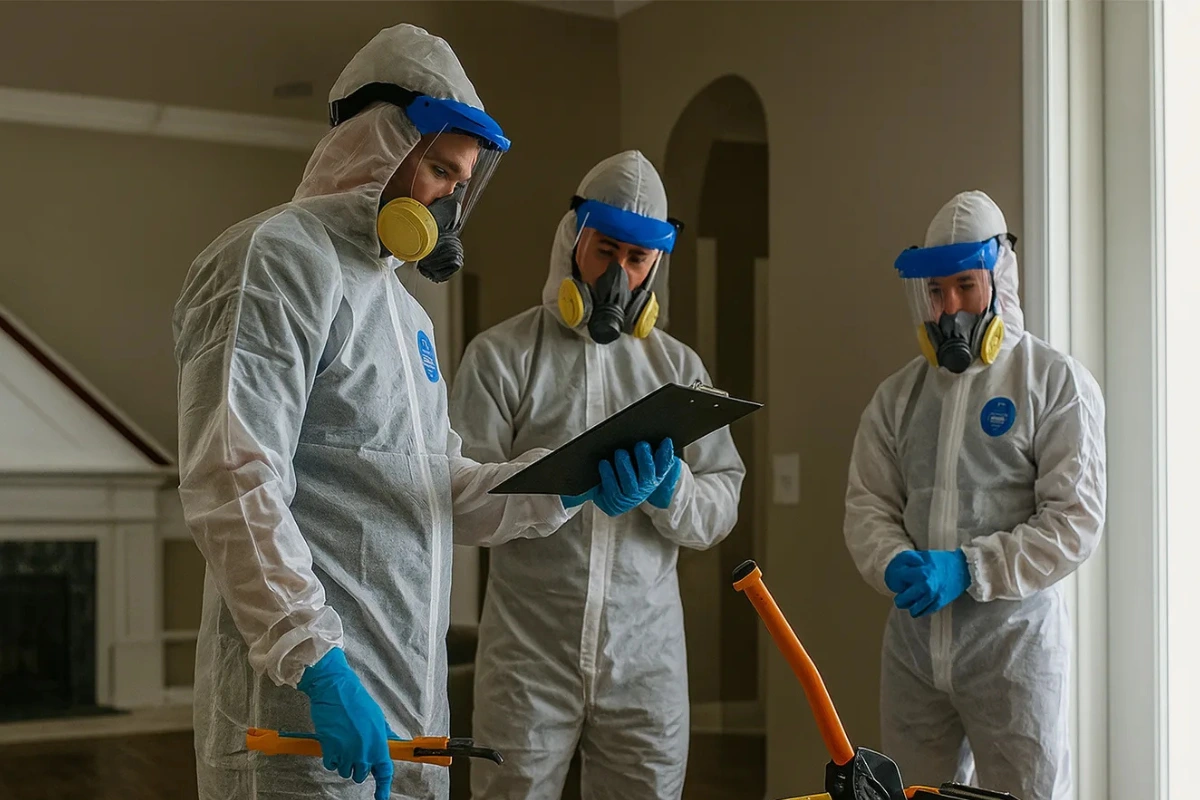
In New Jersey, radon gas poses serious health risks to families across the state. This page explains our radon testing services, when you need them, and what to expect during the process. Our certified technicians provide testing within 48-72 hours using EPA-approved equipment.
Professional Radon Testing Uses EPA-Approved Equipment and Closed-House Protocols
If you own a home with a basement in Bergen County or a split-level in Morris County, you need certified testing to detect radon gas. Radon is a colorless, odorless radioactive gas that forms when radium decays. We use EPA-approved continuous monitors that provide precise measurements for property sales and safety screening.
New Jersey’s granite bedrock makes radon intrusion common in older homes. Our equipment tracks radon levels hour by hour. Closed-house protocols keep windows and doors shut during testing to prevent outdoor air from diluting concentrations.
Get Your Free Consultation
New Jersey Property Transactions Require Radon Testing Under State Regulations
If you’re buying or selling a home in Monmouth County, radon testing is typically required before closing. We deliver legally compliant reports that satisfy lender and title company requirements. Our state-certified inspectors provide documentation in the format your transaction needs.
Building departments in Essex County often reference radon test results when issuing permits for renovated basements. Our testing meets New Jersey Department of Environmental Protection standards for certified radon measurement businesses. We also offer asbestos testing services for comprehensive property inspections throughout New Jersey, Pennsylvania, and Delaware.
Homeowners Should Prepare Properties by Closing Windows 12 Hours Before Testing
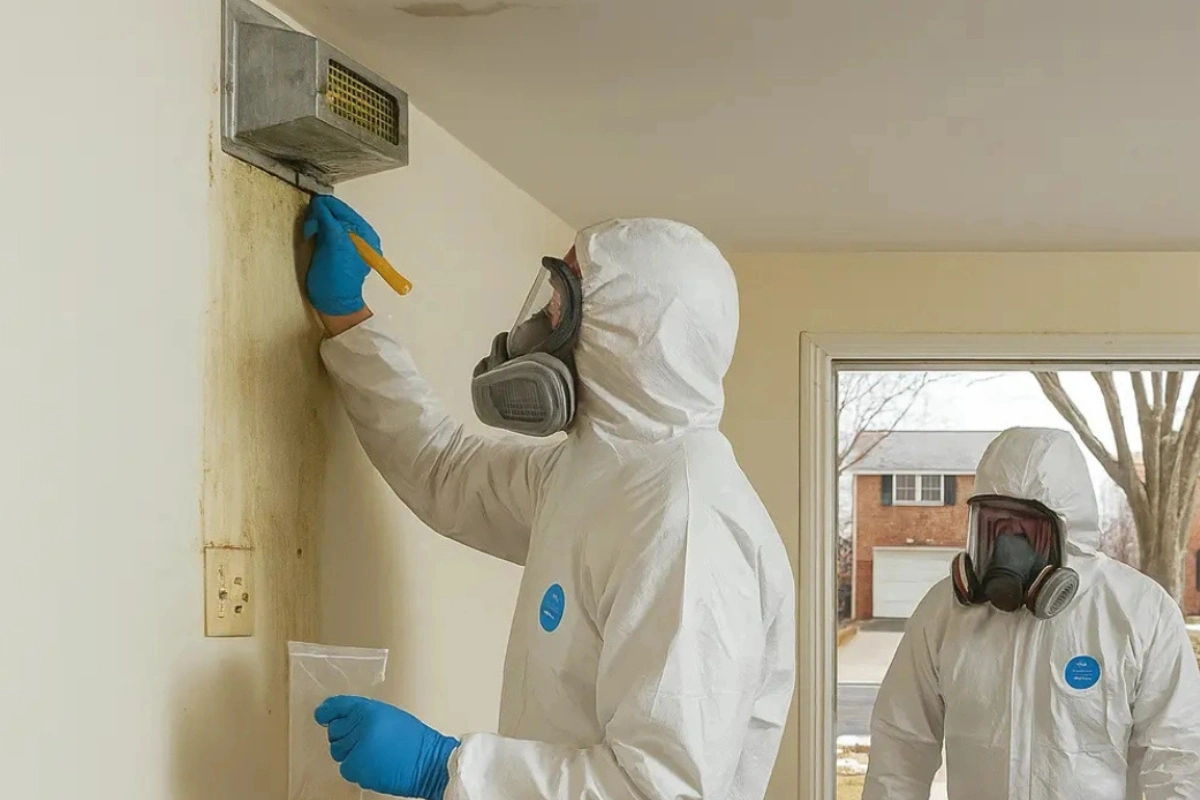
If you’re planning a radon test, you need to understand closed-house conditions. We require all windows and exterior doors to stay closed for 12 hours before we arrive. This preparation ensures accurate readings.
When outside air flows through your home, it dilutes the radon we’re measuring. Closed conditions show you the radon levels you actually breathe daily. Summer humidity in coastal areas tempts you to open windows, but doing so invalidates your results.
Short-Term Radon Tests Deliver Accurate Results When Conducted Under Proper Conditions
If you live in Middlesex County and need to choose between a short-term test and a long-term test, we can help you decide based on your situation. Short-term tests work well when you follow closed-house protocols. We use activated charcoal or electronic monitors that provide reliable snapshots for real estate transactions and initial screening.
New Jersey’s freeze-thaw cycles cause seasonal radon fluctuations. Winter tests often show higher concentrations than summer readings. We explain what your results mean based on the season we conducted your test.
You get accurate data fast. Our short-term approach works for real estate transactions and initial screening. If results show elevated levels, we can discuss your options and next steps.
Normal Activities Continue During Testing With Minor Adjustments to Airflow
If you’re a family in Union County wondering about daily life during testing, you can relax. You don’t need to vacate your home or stop using your HVAC system. We want you to live normally during the measurement period so we capture your typical radon exposure.
You can work, sleep, and use appliances as usual. Just avoid actions that create unusual air pressure changes. Don’t run whole-house fans or open multiple windows. These activities don’t reflect how you normally live.
Older homes in Hudson County with forced-air heating should run systems on normal schedules. This shows us the radon exposure you experience in typical conditions. We measure real life, not artificial scenarios.
Follow-Up Mitigation Becomes Necessary When Test Results Exceed 4.0 pCi/L
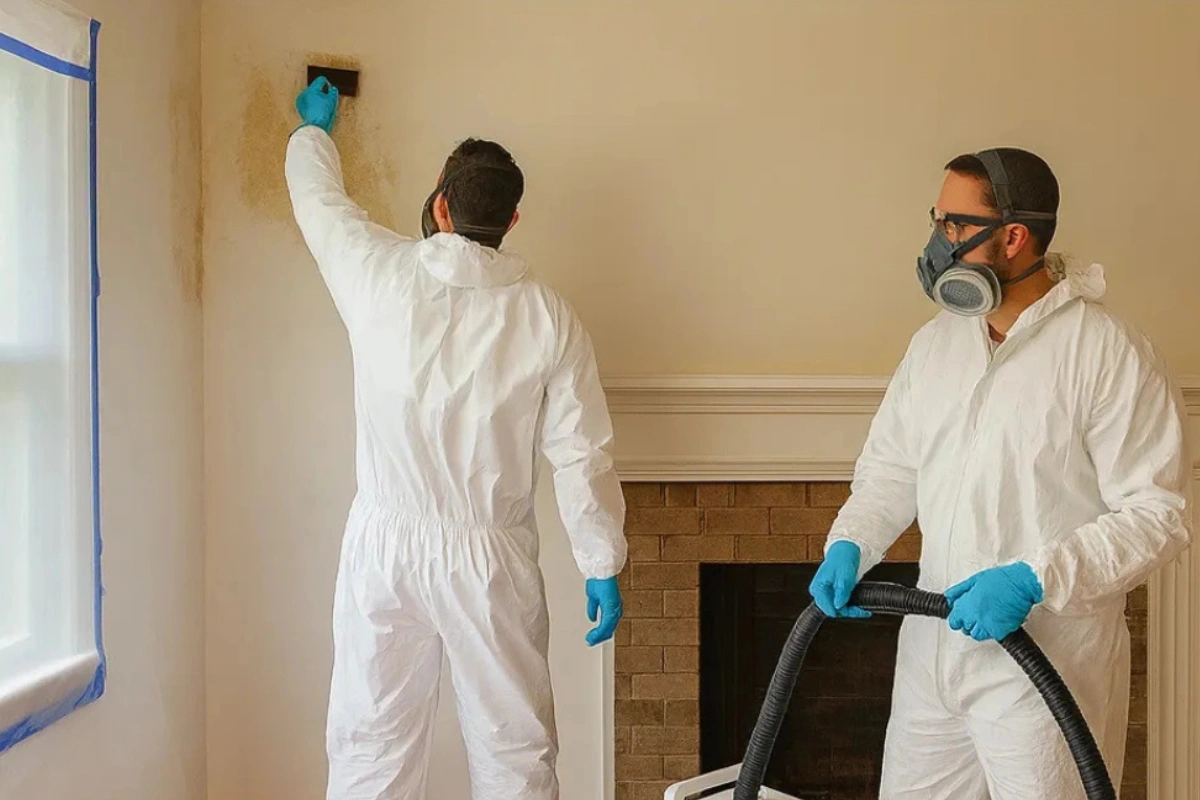
If you receive a radon report showing elevated levels, you need to understand your next steps for protecting your family’s health. Radon is estimated to cause about 21,000 lung cancer deaths per year. We help you reduce indoor air contamination through proven mitigation methods.
Sub-slab depressurization systems installed by licensed contractors can reduce radon levels significantly within days. Somerset County homes built on slab foundations require different mitigation approaches than properties with crawl spaces. We assess your home’s construction and recommend the right system for your specific structure.
We coordinate with certified mitigation specialists throughout New Jersey, Pennsylvania, and Delaware. After installation, we conduct follow-up testing to verify the system works effectively. You receive documentation showing your home now has safe radon levels. Beyond radon, we also provide water testing to ensure your drinking water meets safety standards.
Get Your Free Consultation
- 5.0 rating on Google
- Serving New Jersey with Honesty & Integrity
- Licensed, Insured and Bonded
- 5.0 rating on Google
- Serving New Jersey with Honesty & Integrity
- Licensed, Insured and Bonded
Frequently Asked Questions
Do I need a radon test to sell my home in New Jersey?
Radon testing is typically required during most residential property transactions in New Jersey. Your buyer’s lender will likely require proof of testing before approving the mortgage. We provide reports that meet all requirements for property sales.
How long does radon testing take in New Jersey homes?
Can I use my fireplace during a radon test?
What radon level requires mitigation in New Jersey?
Will running my air conditioner affect radon test accuracy?
How much does radon testing cost in New Jersey?
Your Local Radon Testing Experts in New Jersey
Serving New Jersey homeowners and businesses since 2003 with complete environmental services.
Proudly serving Ramblewood, Larchmont, Hartford, Birchfield, and all of New Jersey – plus Moorestown, Marlton, and Cherry Hill.